


TLDR: Our Performance Marketing Manager, Cris discusses what display advertising is and how to get the best results from their different formats in this blog. Cris has extensive experience analysing complex marketing metrics and turning them into actionable insights that drive real results. Cris has led integrated marketing campaigns end-to-end. This blend of analytical expertise and cross-cultural communication makes her perfectly placed to explain how display advertising truly works. Display ads are visually-led online adverts that appear across websites, apps, and social platforms. Unlike search ads, they don’t rely on keywords but instead use audience signals such as demographics, interests, browsing behaviour, and remarketing lists. They’re ideal for increasing brand awareness, reaching new audiences, and nurturing warm prospects back toward conversion.
Display ads come in many formats, like static image banners, animated GIFs, rich media, video ads, and Google’s popular responsive display ads. You can run them across major platforms like Google Display Network, Meta, and LinkedIn. Effective display advertising relies on strong creative, precise targeting, ongoing optimisation, and regular testing.
Table of Contents
What are display ads?
Display ads are visually-led advertisements. It’s not like search where you have your keywords… This is really audience-based targeting. So, instead of relying on keyword intent (like Google Search Ads), display ads use audience signals, things like demographic information, location, previous website behaviour, or first-party data, to decide who should see the ad. Because they are visual, they’re perfect for grabbing attention, showcasing a brand identity, and nudging people who may not yet be ready to buy.
How do Display ads differ from search ads?
Search ads appear when someone actively types a query into Google. They capture explicit intent. Display ads, on the other hand, work passively in the background. They surface your ads while people are browsing the internet, using signals rather than keywords.
This means display ads excel at top-of-funnel brand awareness, prospecting, and retargeting, whereas search ads are typically more conversion-driven.
Common formats
Display ads come in a variety of creative formats, each suited to different marketing goals:
- Static image ads – simple, branded image banners.
- Animated GIF ads – subtle motion to attract attention. Cris notes that “moving images… capture attention more than static ones.”
- Rich media ads – interactive ads with hover effects, animation, carousels, or embedded forms.
- Video display ads – short video clips that are highly engaging and attention-grabbing.
- Responsive display ads – Google’s automated format. You upload multiple headlines, descriptions, logos, and images, and Google automatically mixes and matches them to find the best-performing combinations.
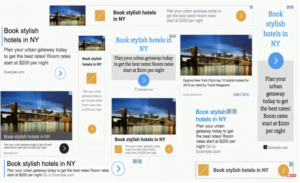
Visual examples
Here are typical examples of what display formats look like:


Targeting methods: Demographic, contextual, behavioural, remarketing
Display campaigns allow for extremely flexible audience targeting. Such as the following methods:
- Demographic targeting, such as age, gender, or location.
- Contextual targeting based on the website’s topic (e.g., sports pages, home décor blogs).
- Behavioural & interest targeting, such as “in-market” audiences. Cris gives the example of people who purchase football equipment.
- Remarketing using first-party data: “people who visited your site… telling Google these are the people we want to reach.”
- Customer list targeting using CRM data for retention or reactivation.
Together, these allow brands to balance broad awareness with precision retargeting.
How ad auctions and placements happen
Unlike search auctions, display auctions rely on:
- the audience signals provided
- creative relevance and quality
- Google’s assessment of the likelihood of engagement
Display ads appear through a real-time automated auction where advertisers bid on an impression, the system selects the most relevant and highest-value ad, and the winning ad is instantly shown to the user.
It’s really what Google thinks is the best based on the signals you’ve provided… It’s not like keywords. Google predicts which combinations of audience + creative + placement will have the highest impact, then serves ads accordingly.
Benefits of display advertising
Brand visibility & awareness
One of the biggest strengths of display advertising is reach. Display ads can generate millions of impressions at a low cost. Cris emphasises that display is “really good for brand visibility,” especially when search and shopping campaigns can “max out” when you have already captured all available keyword-driven demand, display expands beyond that. This makes display ideal for top-of-funnel marketing.
Retargeting & nurturing leads
Display ads excel at re-engaging people who have shown prior interest. Using first-party data, brands can retarget people who viewed products, abandoned baskets, or engaged with content. You can also build lists based on purchase timing. e.g., re-engage customers after two years if your products have a long lifecycle. Cris explains how this prevents wasted ad spend by targeting only relevant audiences.
Cost efficiency & scalability
Display impressions tend to be cheaper than paid search clicks, making it easier to scale visibility without dramatically increasing spend. This is especially helpful when a business wants to reach new audiences beyond keyword-driven demand.
Measurement & performance tracking
While display ads may not drive direct conversions as easily as search ads, they contribute strongly to upper-funnel performance. Cris notes that CTR, impressions, and view-through conversions are important indicators and that uplift tests can help measure contribution to revenue.
Types of display ads
Static image ads
Classic banner ads are simple, branded, and easy to produce.
Animated GIF ads
Offer subtle movement. More eye-catching than static imagery, as Cris mentions, animations often “capture attention more instantly.”
Rich media / Interactive ads
Feature movement, scroll effects, games, or expandable elements. Ideal for engagement-driven campaigns.
Video display ads
Short, visually striking ads shown within placements across websites and apps.
Responsive display ads
Google-optimised ads that automatically resize and adapt to placements. With responsive ads, you upload assets and Google takes care of the rest. They often outperform static creatives, especially for smaller clients with limited production resources.
Display advertising platforms
Google Display Network (GDN)
Google’s Display Network is the most widely used, with reach across 90%+ of internet users and over 2 million websites.
It offers:
- Contextual targeting
- Demographic and in-market audiences
- Remarketing and similar audiences
- Responsive, image, Gmail, and video ad formats
Its strength lies in scalability and automation, particularly through machine-learning-driven responsive ads.
Meta (Facebook & Instagram)
Cris mentions that Meta feels inherently like a display platform because it is “very visual-based already. But they are still technically paid social forms of advertising”
Meta offers placements across:
- Messenger
- The Audience Network (partner apps and sites)
It excels in behavioural targeting, interest-based audiences, custom audiences, and lookalikes, powered by rich user data and strong engagement rates.
LinkedIn ads
With LinkedIn, it’s widely regarded as the strongest B2B display platform.
LinkedIn offers:
- Sponsored content
- Sponsored InMail / Message Ads
- Dynamic ads
- Right-column display placements
Targeting includes job title, seniority, industry, company size, and professional interests, ideal for niche professional audiences and high-value leads.
Best practices for effective display ads
It’s important to use the right creative elements: brand-aligned imagery, clear logos, and strong calls to action. CTAs should match the funnel stage, e.g., “Find out more” for awareness.
Effective campaigns clearly separate prospecting, remarketing, and customer retention audiences. Each group requires different messaging and different bidding levels. Using first-party data is especially powerful.
Your ad should match the look and feel of the landing page. If people click expecting a promo or product, the page must deliver, otherwise, performance suffers.
Testing different creatives, formats, CTAs, and audiences helps uncover what works best. Cris mentions running uplift tests to measure the real impact of display campaigns on overall performance.
To avoid users feeling “bothered” by seeing your ad too often, Cris recommends that you set frequency caps and refresh creatives every 4–6 weeks.
Conclusion
Display advertising is a powerful way to grow brand awareness, reach new audiences, and re-engage warm prospects. It differs from search because it relies on audience signals rather than keywords, and it comes with a vast range of creative formats, static, animated, video, and responsive.
You can run highly effective display ads across Google Display Network, Meta, LinkedIn, and other programmatic platforms. The most successful campaigns combine strong visuals, precise targeting, ongoing experimentation, and regular optimisation.
If you’re new to paid media or want to get more out of your current budget, start by launching a simple PPC display campaign and test different audiences and creatives. Modo25 specialises in display advertising strategy, management, and in-house coaching, helping brands scale efficiently while keeping control of their data. If you would like to learn more about display advertisingor to discuss how we can help with your campaign, feel free to send us an email to team@modo25.com